WESF plays a role in promoting standardization and eliminating global trade barriers.

How can lights help smart cities meet some of their targets? The answer is in many ways, with the help of the IEC.
Smart city lights (Free photo from PxHere)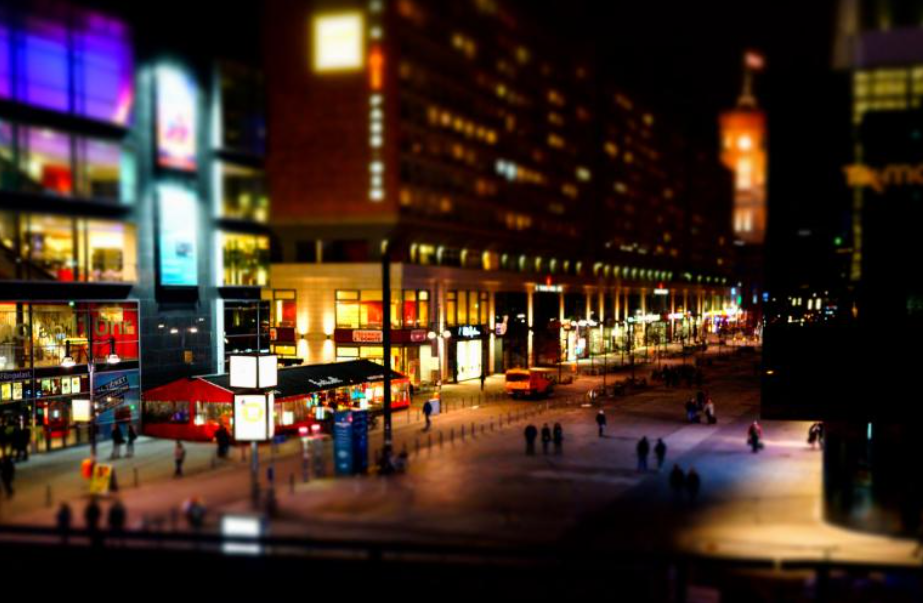
Thomas Edison is often credited with the invention of the first incandescent lightbulb in the 19th century, but many other scientists contributed to similar inventions around the same time (for more on the history of lighting read: The lighting revolution).
He and other inventors at the time could never have imagined that lighting would become a key tool for smart city planning many decades later. Streetlamps have become increasingly smart and do so much more than simply lighting our cities at night. They can help with traffic congestion, to reduce energy consumption, electric vehicle (EV) charging and even improve our moods and sleeping patterns.
The invention of light emitting diode (LED) in the 1960s and the deployment of LEDs from the noughties onwards changed the way we viewed lighting. LEDs use much less energy than either incandescent or fluorescent lamps, which were the most common sources of lighting used around the world until then. LEDs are also much longer lasting – a boon for city planners the world over, even if their price was initially higher than other forms of lighting.
Regulations played a part in the massive advent of LED. As we stand today, according to the latest figures from the International Energy Agency (IEA), while numerous countries phased out incandescent lamps through regulation many years ago, nations are now beginning to eliminate fluorescent lighting as well to make LEDs the dominant lighting technology. The IEA warns that to align with the net zero emissions by 2050 scenario, progress in this area must be sustained to 2030 to ensure that all countries sell predominantly LED technology by then.
Smart LED lights can also switch on and off automatically when required – which is even more energy efficient. Intelligent street lighting equipped with motion sensors can switch on when people are in the street and off when it is deserted. Sensors can also detect pollution levels and that data can be used to improve air quality in the city.
The most prolific technical committee in the IEC is TC 34 which publishes most of the standards relating to lights and lighting technology. To date, it has issued more than 600 documents including IEC 62031, which covers the safety and efficiency of LED lights.
It has also published the IEC 62386 series which offers an open protocol for lighting control systems. Known as digital addressable lighting interface technology, it is a dedicated lighting-control protocol widely used throughout the industry. According to Scott Wade, one of the experts who worked on the standards, “With the standardization of the digital addressable lighting interface, we are able to achieve interoperability between different vendors. The updated versions of these standards offer many new features for the control gear and control devices, as well as backwards compatibility with the previous versions.” The series also specifies the requirements for lighting and occupancy sensors.
Going a step further, integrative lighting, otherwise known as human-centric lighting, looks at how LED lighting can help people’s sleeping patterns and generally improve their moods. According to the International Commission on Illumination (CIE), the light patterns of exposure can be beneficial or non-beneficial for humans depending on the setting, relating to spectrum, intensity, duration and timing of the resulting light exposure. It has worked with ISO on a technical report relating to the matter and the IEC is looking at whether appropriate standards could be required.
One of the four IEC testing and certification systems, IECQ, the IEC Quality Assessment System for Electronic Components, has developed the IECQ Scheme for LED Lighting, to test and assess the quality of electronic components and assemblies used in the production of LED lamps against IEC International Standards. This means manufacturers, suppliers and consumers can be confident that the products they sell or buy have been independently verified and meet all requirements and specifications.
Traffic congestion is one of the major bear bugs of modern city living, especially when people commute from home to work. While working from home has helped, traffic jams persist and plague most modern cities – not only a discomfort for car drivers but also producing massive carbon dioxide emissions. One way around the problem is smart traffic lights. These are expected to monitor incoming traffic and continuously adjust their timing to keep vehicles flowing as smoothly as possible, communicating with other lights to keep logjams at bay.
The R&D for these intelligent lights has been ongoing at various universities around the world. More than a decade ago, researchers at Carnegie Mellon University (CMU)'s Robotics Institute studied the use of artificial intelligence (AI) to coordinate large systems in transport, developing traffic signals equipped with individual computers and software with AI capabilities, which can use cameras, radars and sensors to monitor and control traffic. The researchers looked at their city, Pittsburgh, and employed it as a test bed. Stephen Smith was one of the lead researchers on the project: "We focused on problems where no one agent is in charge and decisions happen as a collaborative activity," he said. "It seemed like a natural application for traffic lights." More than ten years later, Pittsburgh has applied the research’s findings and claims to have reduced travel time by a quarter and traffic jams by 40%. The next step is connected cars – also equipped with sensors, radars and AI (for more on the topic of connected cars read: Smart sensors for safer roads).
The IEC and ISO joint committee for information technology, JTC 1, established a subcommittee which publishes many of the foundational standards for the use of AI. SC 42 has published ISO/IEC TR 24030, a technical report which looks at many AI use cases, including transport in smart cities. It notably addresses how AI can be used for enhancing traffic management efficiency and infraction detection accuracy and for traffic signal optimization based on multi-source data fusion.
Pole-mounted charging (PMC) is gaining traction in the US, Australia and the UK. It offers a cost-effective and creative approach for siting and installing public charging stations for EVs. Chargers are fixed on electric poles or lampposts, which reduces installation costs by 70% in some areas, as the chargers do not require digging up the ground to be installed. The clever idea is to make use of a pre-existing source of power. The initiative was implemented with success in the US state of Massachusetts, in California (Los Angeles) and in other US cities, such as Kansas City and Portland. The IEC 62196 series of standards cover the mechanical, electrical and performance requirements for plugs, socket-outlets, vehicle connectors and vehicle inlets for the connection between the EV supply equipment and the electric vehicle.
Some cities are also installing streetlights equipped with cameras, in addition to sensors, for general surveillance purposes. These are sometimes controversial but contribute to overall security, according to some city planners. TC 79 develops standards for alarm systems and for video surveillance.
Whether to help cities meet sustainable targets, to help with traffic congestion or even the charging of EVs, lighting in our cities is becoming super smart, a boon for smart cities the world over.